PetProsHQ Resources
Before the first pet-care appointment: 5 questions to ask every client
A practical first-appointment checklist for dog walkers, pet sitters, groomers, and trainers—plus five free printable pet-business tools to keep the details straight.
Published by PetProsHQ · Updated
The short answer: before you care for a new pet, confirm what the pet needs, who to contact, what to do if something changes, and how you'll report back to the owner. Don't rely on a quick text message or your memory.
Dog walking, sitting, grooming, and training have different needs. A walker needs the dog's usual route and bathroom routine; a groomer needs handling and coat-care details; a trainer needs the owner's goals and the pet's history. These five questions give you a starting point, not a substitute for service-specific intake.
What does this pet's normal day look like?
Ask the owner to walk you through the routine you will actually be responsible for. Record feeding amounts and times, exercise needs, bathroom schedules, and any house rules. “A little food” isn't an instruction. Ask which food, how much, and where it is kept.
Find out how the pet behaves around unfamiliar people and animals, and whether touching paws, ears, or putting on equipment is uncomfortable. Ask what the owner normally does in those situations. Don't assume that a friendly greeting tells you how the pet will respond to every part of your service.
Write down specifics and read them back. If an instruction is missing or unclear, get it clarified before care starts rather than filling the gap with a guess.
Is there anything that could make this appointment unsafe?
Ask about known handling concerns, allergies, and known health issues relevant to the service. Check for triggers, restrictions, and the equipment you are expected to use. For a walk, that might mean a particular harness and avoiding other dogs; for grooming, it might mean a known sensitivity during handling.
Keep the questions practical: “Is there anything I should avoid doing?” and “What should I do if that happens?” Agree on when you should pause the service and contact the owner. This is care planning, not veterinary advice. Don't diagnose a condition or suggest treatment; questions about a pet's health belong with a veterinarian.
Who should you contact if the owner doesn't answer?
Get the owner's current contact details, a backup emergency contact, and the veterinarian's information before the appointment. Confirm that the backup person knows they are listed and can help if needed. A name without a working phone number won't get you very far.
Ask for clear directions about contacting people and responding to a change in the pet's condition. Obtain relevant authorizations for your service, subject to actual local requirements; a general form isn't a guarantee that every requirement is covered.
Keep contact details, access instructions, and health information in an appropriate secure channel or securely stored record. Never ask someone to put them in public Facebook comments, even if that's where the inquiry began.
Exactly what service did you both agree to?
Confirm the appointment date and time, walk length or service steps, and what is included and excluded. Restate the actual quoted price and cancellation rules you have already agreed to. Don't add a fee, policy, or extra task at the handoff and assume the owner is fine with it.
An inquiry is not a confirmed booking. If details are still being discussed, say so plainly. Once you both agree, send a clear confirmation so neither person has to reconstruct the arrangement from a string of messages.
What will you tell the owner after the visit?
Agree on how the owner wants updates and what your short report will cover: arrival and departure times, services completed, factual observations, and any follow-up needed. Write what you observed, not what you think the owner wants to hear.
A routine update can be brief. A concern needs direct contact according to your agreed care plan, not a quiet note buried at the bottom. For a practical reporting structure, read what to include in a dog-walking visit report.
Try this 30-second handoff before you leave
“Before we begin, let me confirm [pet name]'s routine, any handling concerns, your backup contact, today's agreed service, and how you'd like updates. Have I missed anything important?”
Replace [pet name] before using the script. Have this conversation privately, away from public comments or people who don't need the details. Record any changes in your care notes.
Skip the blank-page paperwork
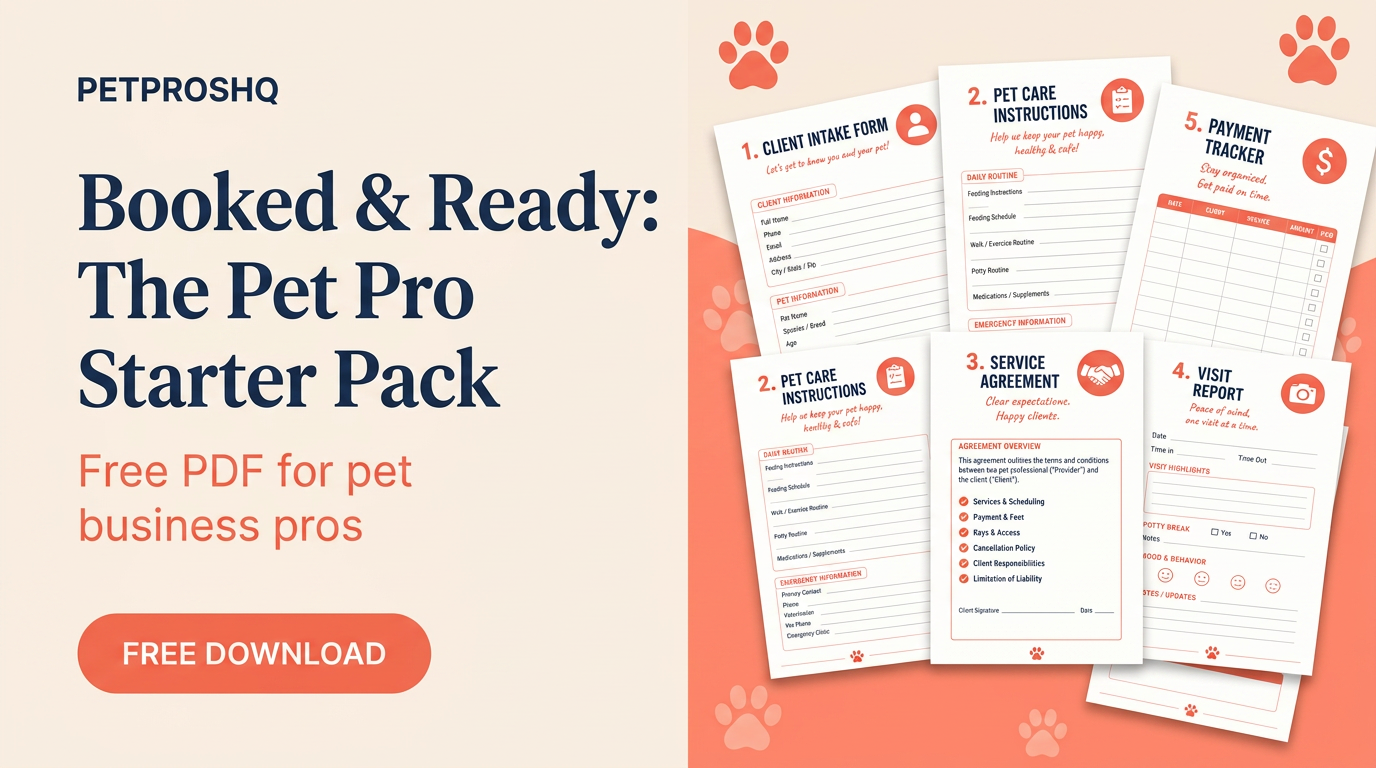
The free Booked & Ready: The Pet Pro Starter Pack brings together five printable pet-business tools:
- New Client Intake Form
- Pet Emergency Information Form
- Daily Pet Report Card
- Pet Business Readiness Checklist
- “Five Documents Every Pet Business Needs” guide
Download the free PDF after email signup; no credit card is required. Choose the pages that fit your work and review them against your actual service needs. This is a printable starter pack, not a promise of editable or fillable files. Use the signup below to get the tools ready before your next appointment.
Continue with resources for your profession
Use the profession hub that matches your work for related forms, free guides, and next steps.
Frequently asked questions
Do I need all five documents for every appointment?
No. Use forms that match your service, complete relevant pet and emergency details before care, and follow actual local requirements.
Can I ask for health and emergency details in Facebook comments?
No. Request private information through an appropriate secure channel, not in public posts.
Is the starter pack really free?
Yes. PetProsHQ offers it as a free PDF download after email signup. No credit card is required, and marketing emails have an unsubscribe option.